Grandmaster Flash
Developed precise cueing and quick-mix methods for repeating and rearranging recorded passages.
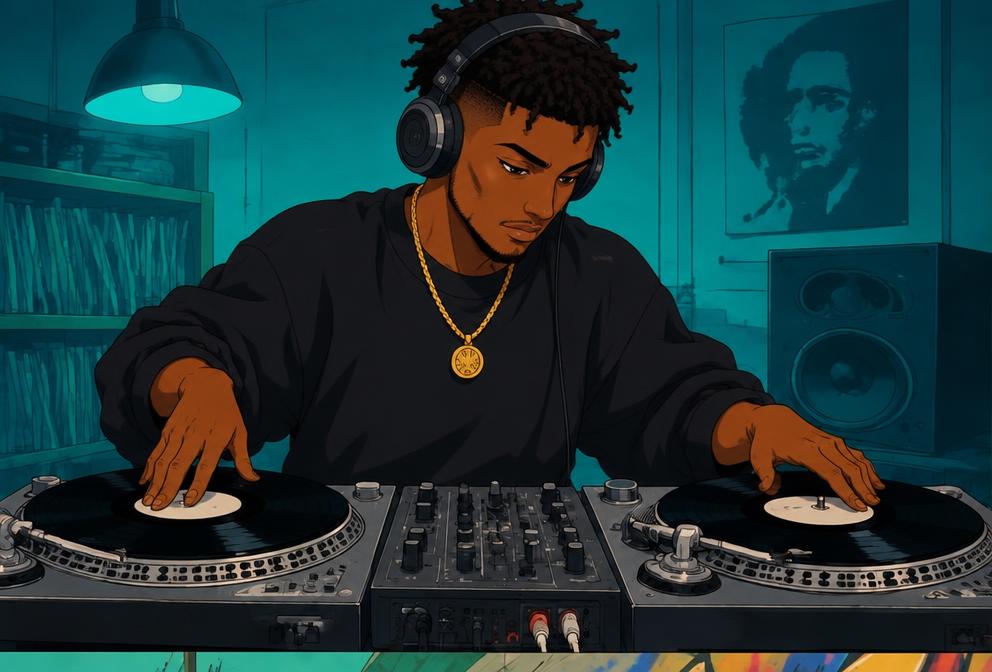
DJing / 1970s
From extended breaks to turntablism, the DJ transforms recorded sound into a live creative language.
Hip hop DJing begins with listening: finding the passage that makes a room move, knowing when to change direction and connecting records that might not otherwise meet. DJ Kool Herc placed the break at the center of the party. Grandmaster Flash then developed precise ways to locate and repeat passages, turning intuitive selection into increasingly controlled live manipulation.
Flash’s quick-mix approach relied on close attention to record position, cueing and timing. Grand Wizzard Theodore is widely credited with pioneering scratching, making the sound of moving a record against the stylus part of the performance. Afrika Bambaataa helped popularize eclectic selections and electro-funk within hip hop’s expanding musical vocabulary. These figures contributed different methods; no single pioneer explains the whole craft.
Beat matching aligns the tempo and rhythmic pulse of two tracks so their transitions feel intentional. A DJ listens through headphones, adjusts speed and chooses where phrases meet. Musical judgment matters as much as synchronization: compatible rhythms can still make an awkward blend if the vocal, bass line or energy clashes.
Scratching turns controlled record movement and mixer cuts into rhythm and texture. Beat juggling goes further, rearranging short fragments—often from two copies of the same recording—into new patterns. Turntablism names a performance approach in which decks and mixer function as instruments, not simply playback equipment. These techniques reward patient repetition, clean timing and a distinctive ear.
Early setups were assembled from available turntables, mixers, amplifiers and speakers. Technics SL-1200-series decks became influential for their direct-drive response and durability. Crossfaders, slipmats and improved cueing gave performers finer control. The equipment mattered, but access varied: crews learned to adapt to the tools they could obtain.
Digital vinyl systems later connected familiar decks to computer libraries, while controllers and software expanded cue points, loops and effects. Digital tools can lower some barriers and introduce others, including cost and dependence on proprietary systems. A visible waveform is helpful, but it does not replace knowing a record or reading a room.
DJ battles turned technical invention into public conversation. Events such as the DMC championships helped build international turntablist networks. Performers developed routines around speed, precision, musicality and surprise, while other DJs studied and answered those ideas.
A battle routine and a long dance-floor set ask different questions. One can showcase tightly rehearsed virtuosity; the other demands sustained attention to people’s energy. Both can be creative. Competition is most productive when it celebrates the work rather than humiliating the person behind it.
DJing offers a philosophy of possibility: existing recordings can become material for something new. The DJ connects generations of music, reminding listeners that hip hop belongs to a wider history of funk, soul, disco, jazz and Caribbean sound culture.
That creative recycling also brings obligations. Credit musicians and selectors, understand the difference between playing a recording and releasing a sampled composition, and seek the permissions a project requires. The strongest innovation does not pretend its sources never existed; it makes those connections audible.
Give the pioneers their flowers
Developed precise cueing and quick-mix methods for repeating and rearranging recorded passages.
Widely credited with pioneering scratching as a creative turntable technique.
Moving a record back and forth under the stylus, often with mixer cuts, to make rhythmic sounds.
Rearranging recorded fragments across decks to create new rhythmic patterns.
Locating and preparing a record’s starting point before bringing it into the mix.
Follow the movement
Share a favorite breakbeat or a lesson from behind the decks.
@planet4elementsThe Planet 4 Elements dispatch
Hip hop stories, pioneer spotlights and fresh perspectives on the four elements.
Planet 4 Elements · Each one, teach one.