Cindy Campbell
Organized the August 11, 1973 back-to-school party at 1520 Sedgwick Avenue, a landmark gathering in hip hop history.
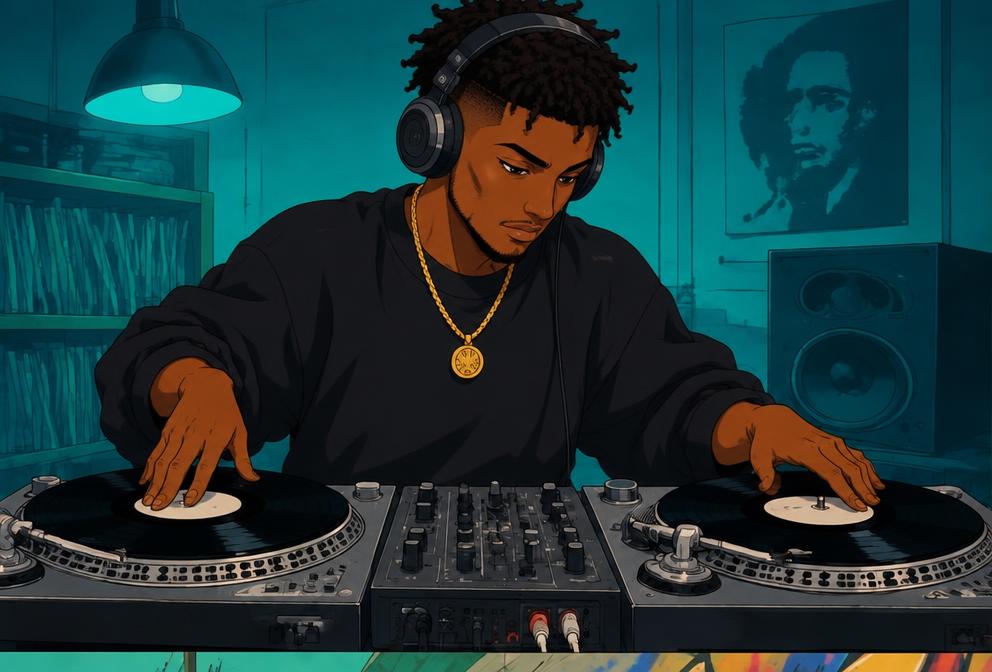
DJing / 1970s
A Bronx party became a landmark in a culture built through sound, movement, writing and collective imagination.
On August 11, 1973, Cindy Campbell organized a back-to-school party in the recreation room of 1520 Sedgwick Avenue in the Bronx. Her brother Clive Campbell—DJ Kool Herc—provided the sound. The gathering is widely commemorated as hip hop’s birthday. It was not the instant invention of every element, but a landmark in a movement taking shape through many people, parties and neighborhoods.
Herc, who had moved from Jamaica to New York, brought a powerful sound-system sensibility to the party. His selections drew on the funk and soul dancers loved. When he noticed the crowd becoming especially animated during a record’s percussion break, he treated that passage not as a brief transition but as the center of the experience.
Herc’s “Merry-Go-Round” approach moved between the breaks of records to sustain the dance floor’s energy. Two turntables made it possible to return to a break instead of waiting for the whole song to play again. Later DJs refined the timing and mechanics of this practice. What mattered culturally was the shift: the DJ could rearrange recorded music live, and dancers could help determine which parts became important.
The innovation was social as well as musical. A familiar record could become something unexpected in the hands of a selector responding to a crowd. The party was a shared composition, with the DJ, dancers, MC and audience all contributing to its momentum.
The Bronx of the 1970s faced lost jobs, housing abandonment, fires and cuts to public services. These conditions did not make creativity inevitable, and they should not reduce the borough to a story of ruin. Black and Latino residents also sustained families, social networks and rich musical traditions. Young people built spaces for pleasure, recognition and belonging in a city that often failed to invest in them.
Recreation rooms, parks and streets became gathering places. Equipment, records and practical knowledge circulated through friendships and crews. Competition could drive invention; collaboration kept events possible. Hip hop’s beginnings show how cultural resources can be made collectively even when institutional resources are scarce.
DJing organized the sound. MCing grew from hosting and shout-outs into rhythmic verbal performance. Breaking developed around the break, turning musical accents into movement. Graffiti writing had its own earlier histories in Philadelphia and New York, but shared neighborhoods, networks and a desire to make a name visible. These practices did not all begin at the same party; their association as hip hop’s four elements developed over time.
The four-element framework is a useful doorway, not a complete boundary. Beatboxing, production, fashion, knowledge and many other practices also belong to the culture. Learning the framework should open curiosity rather than become a test of who is allowed to participate.
Records, films, tours and migration carried hip hop beyond New York. Its global reach would eventually change music, dance, design and language. Yet its local lesson remains powerful: people can turn available tools into a new form of expression and invite others into the circle.
For Planet 4 Elements, honoring that legacy means crediting creators, sharing knowledge and making disagreement constructive. “Each one, teach one” connects historical study with everyday practice: listen to people who were there, welcome new voices and build something worth passing on.
Give the pioneers their flowers
Organized the August 11, 1973 back-to-school party at 1520 Sedgwick Avenue, a landmark gathering in hip hop history.
Made percussion breaks the center of the party, creating more space for dancers and MCs.
A passage where percussion comes forward and other instruments or vocals often drop away.
Herc’s approach to moving between record breaks to keep the dancers’ energy going.
A crew and its equipment for selecting, amplifying and sharing music; a major tradition in Jamaican musical life.
Follow the movement
Which record brings your neighborhood together?
@planet4elementsThe Planet 4 Elements dispatch
Hip hop stories, pioneer spotlights and fresh perspectives on the four elements.
Planet 4 Elements · Each one, teach one.